Pellet or Solid Fuel? How to Choose the Right Stove for Your Home
Every stove keeps you warm. The real differences are how much thought it asks of you, what it costs to feed, and how it behaves on a freezing night when the power is out. In our Cashel and Newbridge showrooms, most people are choosing between two options: a wood pellet stove that runs itself, or a solid fuel stove that burns logs and smokeless fuel the traditional way. Neither is better across the board. One will simply fit your home and your habits better than the other. Here is how to tell which.
Pellet vs solid fuel at a glance
Choose pellet for
- Automatic fuel feeding
- Timers and thermostatic control
- Steady heat with less daily attention
Choose solid fuel for
- A traditional live fire
- Flexible fuel options
- Heat that works without electricity
Wood pellet stoves: heat that runs itself
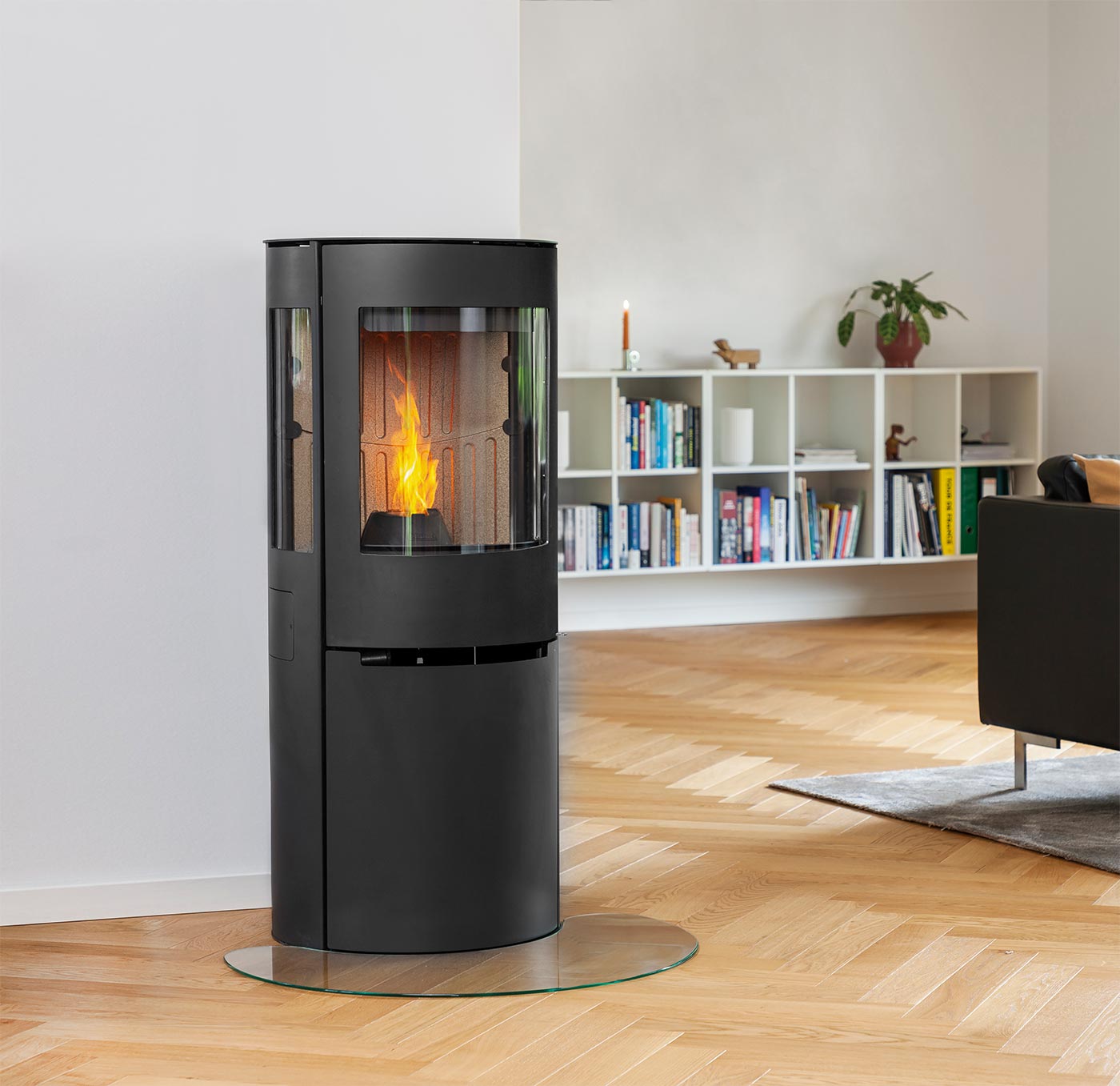
A wood pellet stove burns small, compressed wood pellets fed automatically from a built-in hopper. You set a temperature or a timer, and the stove lights, feeds and adjusts itself to hold the room steady. Fill the hopper and, depending on the model and how hard it is working, it can run for hours at a time, often right through the day, before it needs topping up.
The trade-off: a pellet stove relies on electricity to run its auger, fan and controls, and it needs a dry space to store the bags of pellets.
When a pellet stove is the right choice
Choose pellet if the house sits empty during the day and you want to walk into a warm room rather than a cold one and a bucket of coal. It suits larger or well-insulated homes where steady, thermostatic heat matters more than the drama of a live fire.
It is the option for anyone who wants heating they can set once and mostly forget, with clean, consistent fuel and very little daily fuss. If “warm when I get home, no thinking required” is what you are after, a pellet stove is hard to beat.
Solid fuel stoves: a real fire, on your terms

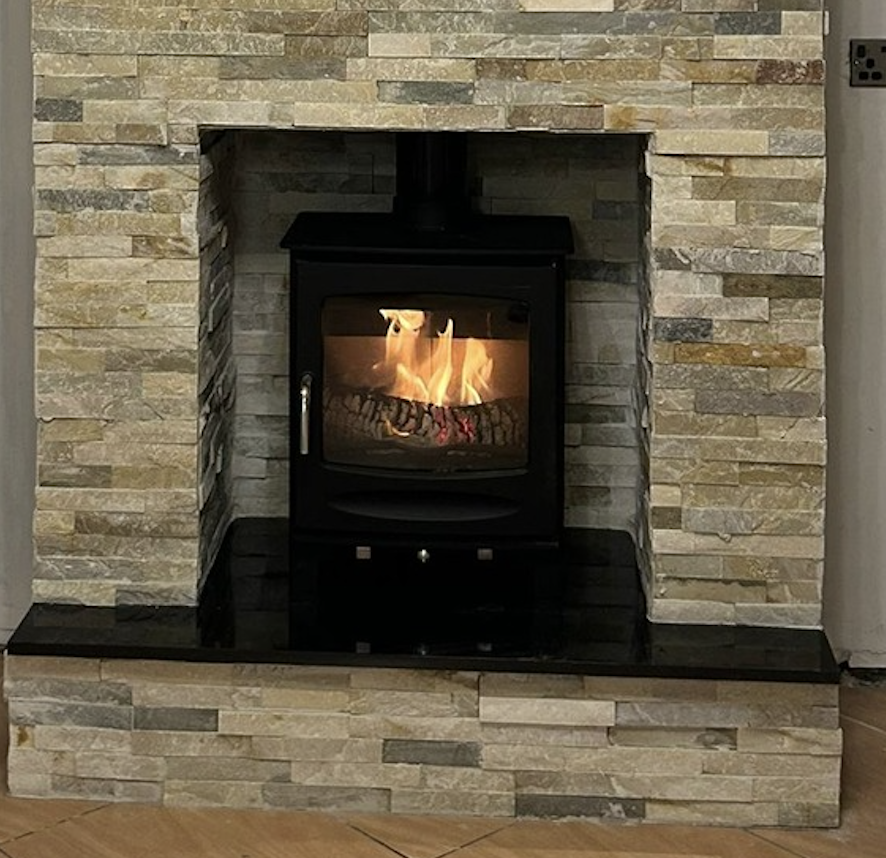
A solid fuel stove burns logs, smokeless coal or briquettes, loaded and tended by hand. Many models are multi-fuel, so you can switch between logs and smokeless fuel depending on price and what you can get locally. There is no hopper, no auger and no electronics: you build the fire, and you feed it.
That also means the stove keeps burning when the power goes, which during an Irish winter is worth more than it sounds. The upkeep is simple but hands-on: clearing ash, cleaning the glass, and enjoying the flames while you do.
When a solid fuel stove is the right choice
Choose solid fuel if the fire itself is part of the appeal: the flames, the crackle, the ritual of lighting it of an evening. It makes strong sense if you can get affordable or free logs, want the freedom to burn whatever fuel is cheapest that week, or prefer a simple unit with nothing to break.
And if you want heat you can count on when the electricity fails, a solid fuel stove keeps going where a pellet stove cannot. For a cosy room and a hands-on owner, it is the classic choice for good reason.
Want to heat more than one room?
Whichever way you lean, if you want the stove to do more than warm its own room, ask about boiler models. Boiler stoves come in both pellet and solid fuel, and they connect to your radiators and hot water cylinder, so one appliance can take a real bite out of your central heating bill.
Tell our team the size of your home and we will match the output to it.
The bottom line
Go pellet for hands-off, thermostatic warmth in a home that is often empty by day. Go solid fuel for a real flame, fuel flexibility, and heat that shrugs off a power cut.
Still weighing it up? That is exactly what a free site visit is for. Our team will look at your room, your chimney and how you actually live, then tell you straight which stove fits.
Frequently asked questions
Do pellet stoves work in a power cut?
No. A pellet stove uses electricity to feed pellets and run its fan and controls, so it stops if the power goes out. A solid fuel stove needs no electricity and keeps burning, which is one reason plenty of Irish homes still choose one. If power-cut resilience matters to you, flag it on your site visit and we will factor it in.
Can either type heat my radiators and hot water?
Yes, if you choose a boiler stove. Both pellet and solid fuel boiler models connect to your central heating and hot water cylinder, so a single stove can heat the room it sits in and rooms elsewhere in the house. Tell us the size of your home and we will size the output correctly.